Basically Dentistry: K Bhagwandin
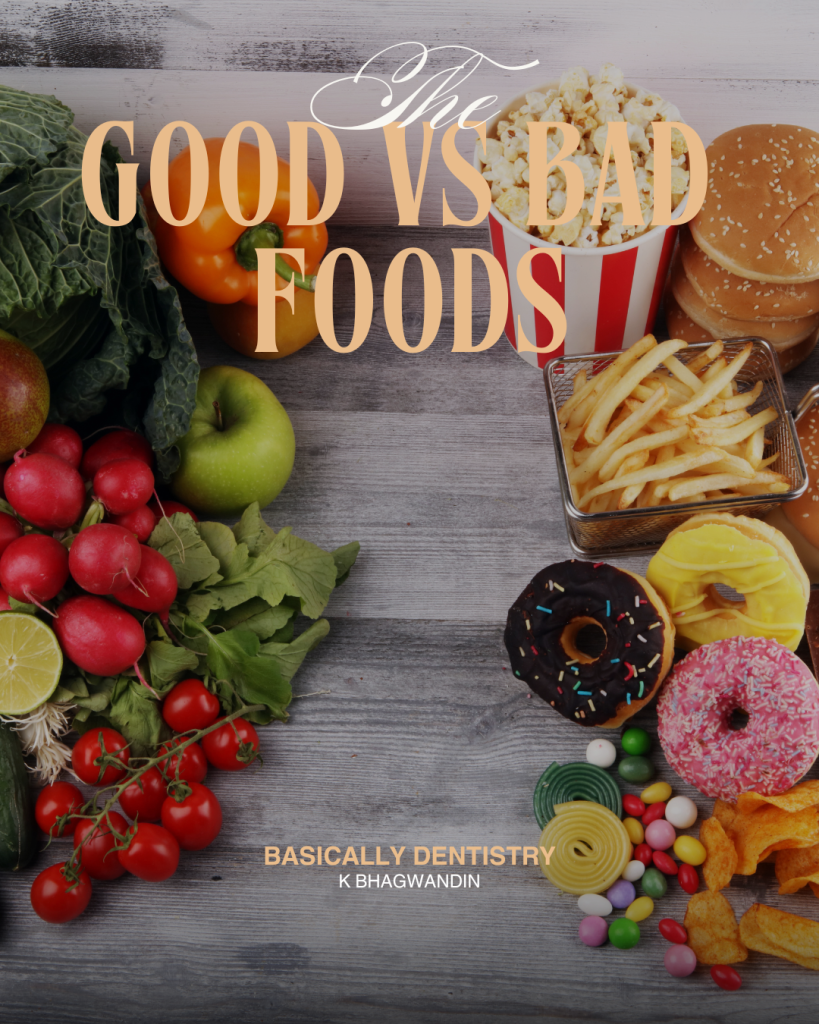
Taking care of your teeth isn’t just about brushing and flossing , the foods we eat ,frequency and types of food we eat play a huge role in our mouth. There are foods which can supplement your oral hygiene routine and help to strengthen enamel, protect the gums and reduce the risk of cavities.
Today we will discuss the best foods for healthy teeth, which foods to avoid, and how smart nutrition choices can help you keep a brighter, healthier smile.
Why does the food we eat matter?
Everything we eat goes through our mouth first then to our stomach to continue the digestive process. While we chew even if we’re fast eaters, bacteria in your mouth interact with food particles and sugars, producing acids that attack your tooth enamel. Over time, this can lead to cavities, enamel erosion, and gum disease.
Eating tooth-friendly foods helps:
- Strengthen enamel
- Neutralize harmful acids
- Promote saliva production
- Reduce plaque buildup
Foods to Strengthen your teeth
1)Dairy products- Milk ,cheese,yoghurt
How do they help- These are packed with calcium and phosphates which help to strengthen and rebuild enamel.
Bonus Benefit: Stimulates saliva production which assists in fighting cavities and washes away bacteria and harmful acids.
Best choices:
- Low-sugar yogurt
- Hard cheeses like cheddar or Swiss
- Milk with meals
2)Crunchy Fruits and Vegetables
Examples: Apples, carrots, celery, cucumbers
What do they do :Crunchy produce acts like a natural toothbrush, gently scrubbing teeth as you chew.
Why they help:
- Increase saliva flow
- Help remove plaque
- Provide essential vitamins for gum health
3. Leafy Greens
Examples: Spinach, kale, lettuce
What do they do:Leafy greens are packed with calcium, folic acid, and vitamins, all of which support healthy teeth and gums.
Bonus:They’re also low in sugar, making them a safe snack option for your smile.
4. Nuts and Seeds
Examples: Almonds, walnuts, sesame seeds
What do they do:Nuts provide minerals like calcium and phosphorus and are low in sugar.
Bonus: Avoid candied or honey-roasted nuts, which can stick to teeth.
5. Lean Proteins
Examples: Chicken, fish, eggs
What do they do:Proteins contain phosphorus, a mineral essential for protecting tooth enamel and maintaining bone strength.
Bonus:Fatty fish like salmon also provide vitamin D, which helps your body absorb calcium more effectively.
6. Green and Black Tea
What do they do:Tea contains polyphenols, which help slow the growth of bacteria that cause cavities and gum disease.
Bonus: Drink tea without added sugar to get the benefits without the risk.
7. Water (Especially Fluoridated Water)
Water is one of the best things you can drink for your teeth.
Benefits include:
- Rinses away food particles
- Prevents dry mouth
- Strengthens enamel when fluoridated
Foods and Drinks That Are Bad for Your Teeth
1. Sugary Snacks and Candy
Candy feeds harmful bacteria that produce acid, increasing your risk of cavities.
Worst offenders:
- Sticky candies (caramels, gummies)
- Hard candies that dissolve slowly
2. Soda and Sports Drinks
- These beverages are high in sugar and acid, which can erode enamel quickly.
- Even diet sodas are acidic and can weaken teeth over time.
- The biggest problem with soda is that they flow in between your teeth and cause cavities in between without you knowledge and you only realise this when it’s too late.
- Since you don’t notice it for a while this affects several teeth
3. Starchy Foods
Foods like chips, crackers, and white bread can break down into sugars and get trapped between teeth.
This creates the perfect environment for plaque buildup.
4. Citrus Fruits and Juices (In Excess)
While citrus fruits contain vitamin C, their high acid content can wear down enamel.
Tip: Rinse with water after consuming acidic foods and wait 30 minutes before brushing.
5. Alcohol
Alcohol can dry out your mouth, reducing saliva production and increasing the risk of cavities and gum disease.
Tips for Eating Smarter for Better Oral Health
- Eat sugary foods with meals, not alone
- Drink water after snacks to rinse your mouth
- Avoid grazing all day — your teeth need time to recover
- Try sugar free gum after snacks to help stimulate saliva and keep teeth clean
- Brush twice daily and floss once a day
- Visit your dentist regularly for cleanings and exams
A Healthy Diet + Regular Dental Care = A Healthy Smile
Eating the right foods can make a big difference in your oral health, but it doesn’t replace professional dental care. Regular checkups allow your dentist to catch issues early and keep your smile in top shape.
If you have questions about how your diet affects your teeth or want personalized advice, schedule a dental exam with your dentist today.