

Flossing is the process by which food debris and plaque are removed from interdental areas (areas between your teeth) using dental floss. Dental plaque is a bacterial biofilm that causes chronic gingivitis and periodontitis (Hasan & Palmer,2014), and flossing removes plaque and controls its accumulation. (Chapple et al, 2015). We’ll cover the importance of flossing and its relationship to gingivitis (inflamed gums), the benefits of flossing, and should you brush first or floss first.
How does not flossing lead to gingivitis (inflamed gums)?
Plaque is a biofilm that contains bacteria, when you brush your teeth regularly you remove the plaque however your toothbrush can’t access the tight spaces in between your teeth. Here the plaque starts to build up and irritate your gums. Your body counteracts this irritation with the immune response commonly seen as redness, swelling, heat, pain, and bleeding. When this happens it’s known as gingivitis. If gingivitis isn’t treated and it continues to progress it starts to affect the supporting structures of your teeth, this is known as periodontitis. It can also lead to cavities, which occur more frequently in between your teeth.
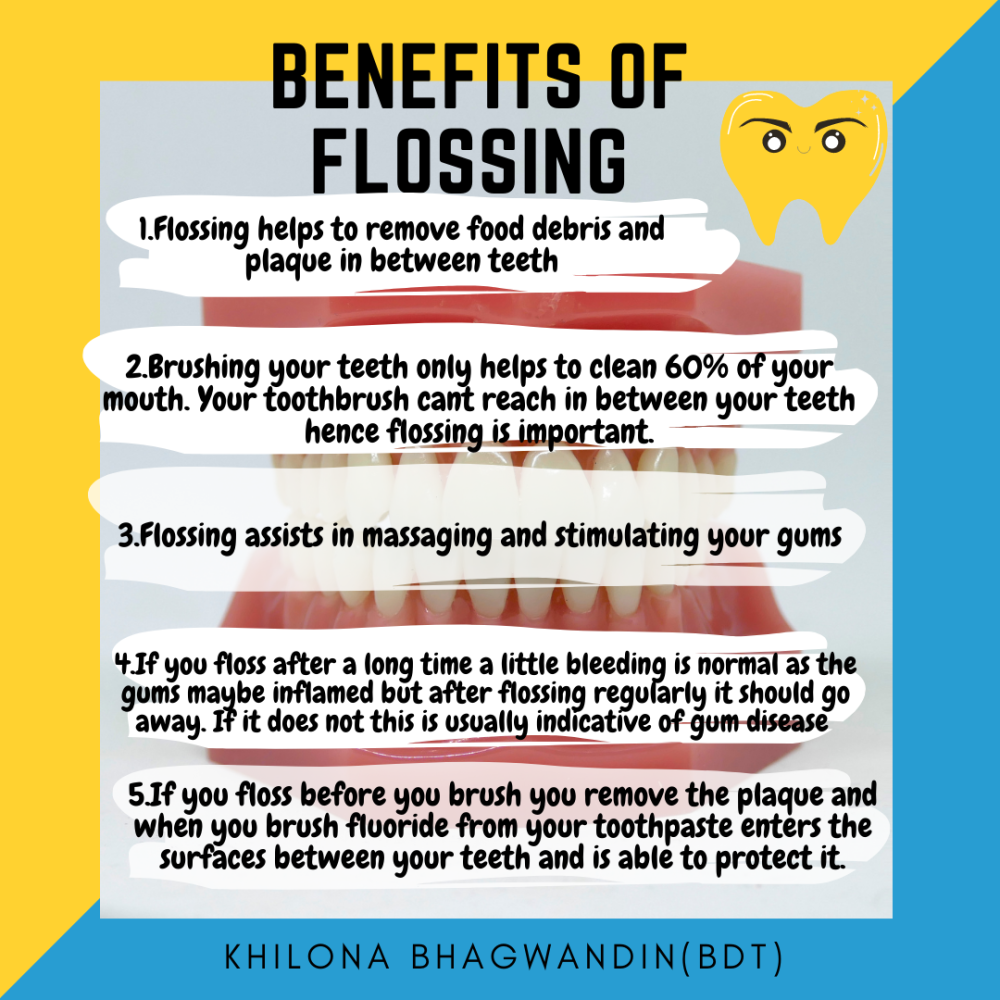
Benefits of flossing
1. Helps to remove plaque and stop it from accumulating in between your teeth.
2. Brushing your teeth only helps to clean 60% of the mouth.
3. Flossing massages the gums
4. If you floss after a while a little bleeding is normal as the gums maybe inflamed but after flossing regularly it should stop. Healthy gums do not bleed.
5. Allow for fluoride to enter from your toothpaste and protects these surfaces.
Should you brush first or floss first?
The answer varies on whom you ask and there’s sound reasoning behind choosing either one. If you choose to floss first, it removes plaque and debris from between your teeth and allows for fluoride to enter when you’re brushing afterward. If you choose to brush first when you floss afterward you push the fluoride into the surfaces between your teeth allowing it to be protected. The choice is up to you because one aspect all oral health professionals can agree on is that any flossing at any time is better than no flossing at all. Personally, if flossing isn’t your most favorite thing to do then do it first to get it out the way and allow fluoride from your toothpaste to enter in afterward.
Ways to motivate yourself
1. Keep floss in sight- keep it in a place where you’re most likely to see it. This works as a visual reminder. Examples include on top of the sink, next to your toothpaste or in your bathroom drawer.
2. Make it part of your routine- as mentioned before try to floss before or after you brush your teeth. Also, try doing it at the same time every day to help develop it into a habit.
3. Be kind to yourself, change doesn’t happen in a day- just because we’re telling you to floss doesn’t mean you’re suddenly going to start doing it 7 days a week. Cut yourself some slack. It takes time to form a habit so if you forget it’s not a train smash. Try to start by flossing 2 days a week, once you’re used to that increase it to 4 days a week and so on.
Flossing is an important and indispensable part of the oral hygiene routine. It plays an important role in preventing cavities, gingivitis, and periodontitis. When done correctly it has several benefits which improve the overall health of your mouth. If you choose to brush or floss first, any kind of flossing is beneficial. Toothbrushing with the use of fluoridated toothpaste helps to reduce plaque accumulation and protect gingival health. As dentistry continues to advance, one thing remains certain, prevention is better than any cure. Taking into consideration all these points this is probably why your dental professional won’t let it go.
Treat people with kindness.💗
Khilona Bhagwandin (BDT)
References:
Margabandhu S, Garale S, Giri M. Efficacy of dental floss as an adjunct to toothbrushing in dental plaque and gingivitis: An open-labeled clinical nonexperimental study. J Indian Assoc Public Health Dent 2019;17:279-8
Cepeda, M. S., Weinstein, R., Blacketer, C., & Lynch, M. C. (2017). Association of flossing/inter-dental cleaning and periodontitis in adults. Journal of clinical periodontology, 44(9), 866–871. https://doi.org/10.1111/jcpe.12765
5 Ways to Motivate Yourself to Floss Every Day by West Chester Dental Arts